 Find Romantasy Books

Outlander 4-Copy Boxed Set: Outlander, Dragonfly in Amber, Voyager, Drums of Autumn
Diana Gabaldon
4.8
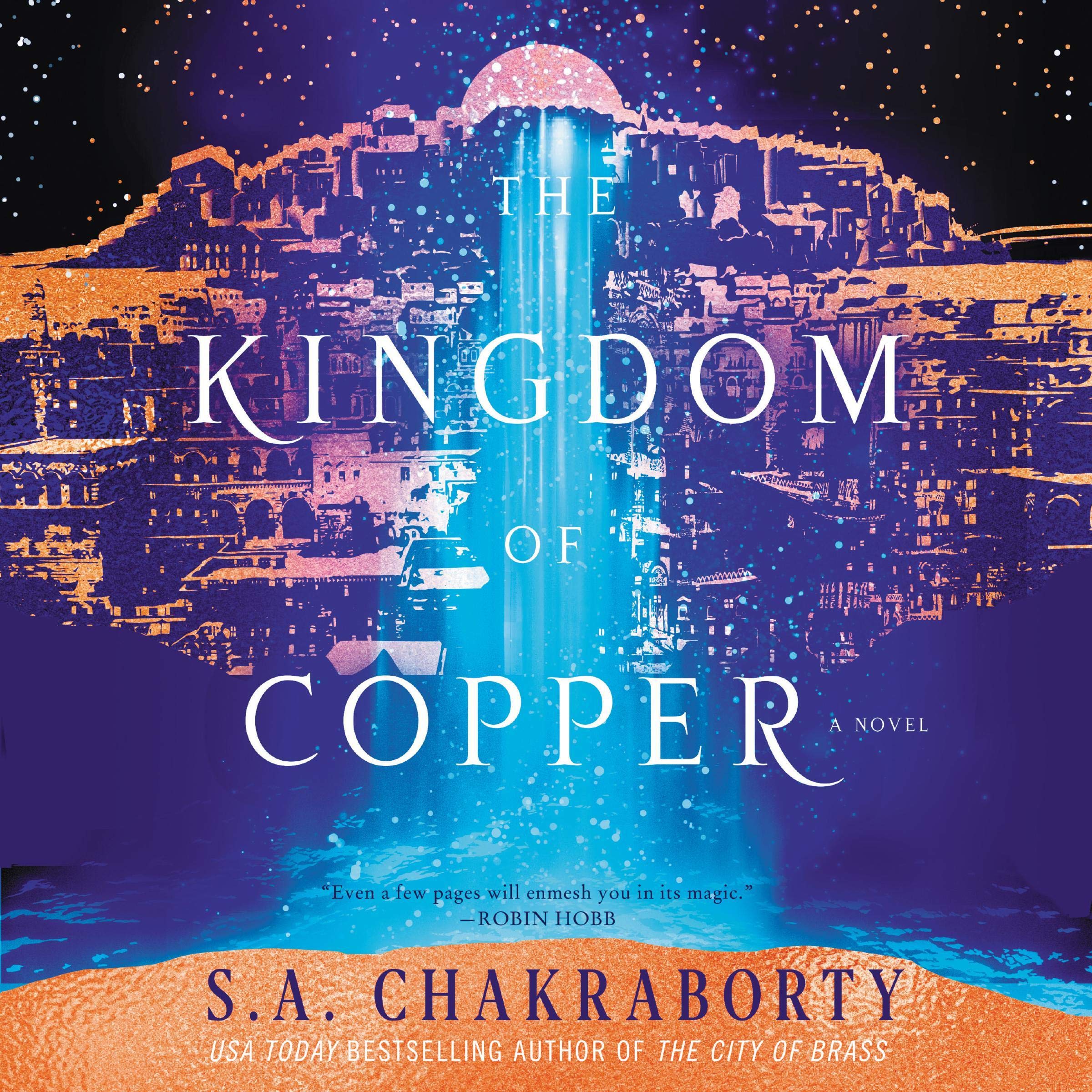
by S. A. Chakraborty
In the aftermath of a brutal power struggle, the magical city of Daevabad teeters on the edge of collapse. Nahri, once a street-smart con artist from Cairo, now finds herself trapped within the city’s golden walls. As the last survivor of a decimated tribe, she must navigate the treacherous politics of a royal court ruled by the man who usurped her family’s throne.
While she hones her latent healing powers, she remains a pawn in a dangerous game where one wrong move could mean the erasure of her people. Meanwhile, Prince Ali endures a harsh exile in the unforgiving desert. Stripped of his titles and hunted by his own kin, he struggles to master the volatile, ancient magic gifted to him by the enigmatic marid—a power that threatens to expose the dark foundation of his family’s reign.
As a mysterious, ancient threat gathers in the desolate north, the paths of Nahri and Ali converge once more. Bound by shifting loyalties and the burden of their bloodlines, they must decide who they can trust before a storm of fire consumes the city. In this world of djinn and deep-seated grudges, survival requires more than just magic; it demands sacrifice.
EllenA beautifully executed improvement from book 1
"Kingdom of Copper is an intense, captivating, and at times disenfranchising read that brought a deeper and more elevated game compared to City of Brass. After a brief prologue, Kingdom of Copper picks up after a 5 year time jump from the ending of City of Brass. Nahri is now married to Muntadhir, Dara is serving the not-dead-after-all Manizheh, and Ali is happily living an exiled life in a remote village until he is forced to return to Daevabad. Nahri and Ali must navigate the politics and prejudices of Daevabad while Dara works to reconcile his new role in the world. Despite the length of the book, it never seemed to drag as the first one did at times. The action was intense and the politics and scheming were fascinating and nauseating (in a good way). I loved to see Nahri and Ali working together again. In the first book, I struggled to like find the characters likable enough to root for. But they was much improved in book two. Nahri was the most improved character of the book. She becomes a passionate and independent character that is willing to take a stand against the status quo. She could be naïve, and at times I questioned whether she would make the right choice, but that added a welcome level of realism. Ali was my favorite from the first book and that continued in book two. I actually enjoyed him more since his piety and devoutness didn’t show up on the page as much. He is the character I trusted the most and I loved the now anguished relationship with his family. I rather disliked Dara in City of Brass but once we got to see chapters from his point of view, I found him to be vastly more sympathetic and nuanced. It was a relief to see his regret and conflicted emotions about the travesties he has committed and is planning to commit again. I still was against him and his plans, but I felt sympathy for him and at times could understand his motivations. The shades of grey in almost all the characters is something that really brings the book alive. It is sometimes difficult to pick out who the villain is and no one is entirely innocent. They all think their actions are justified based on what has been done to them, their families, and their ancestors. They all are blinded by their prejudices and unwilling to see that it is not their enemies that suffer from the wake of destruction but the innocent bystanders. It is a poignant reminder that responding to violence with greater violence perpetuates the cycle of hatred and leads down a path that will never lead to peace. Overall, this book was both entertaining and thought provoking. It is vivid, beautifully written, and sure to stay with you for a while. ["
June 10, 2024 Verified Purchase
Waites Family*Review from The Illustrated Page*
"The Kingdom of Copper is an amazing follow-up to Chakraborty’s debut novel, The City of Brass. In fact, I may have loved it even more than the first book! If you haven’t read The City of Brass, please do so before reading The Kingdom of Copper. The rest of this review will contain spoilers for The City of Brass. Five years after the events of The City of Brass, and Daevabad is in trouble. The shafit, those with human ancestry, are being treated worse than ever, and tensions between all major fractions are high. Plus, the city’s facing intense economic issues. Nahri’s now married to Muntadhir and living a highly constrained life, as her father-in-law barely ever allows her to leave the palace. Ali’s survived assassination attempts and has made a life for himself in a small, backwater village where his powers over water left to him by the marid possession of the previous book can mean life or death in the desert. Meanwhile… Dara’s back. He’s somehow been raised from the dead, and furthermore, restored to what the djinn were before Solomon’s Seal. And he’s not the only one who’s unexpectedly alive — so is Nahri’s mother, and she’s planning to reconquer Daevabad, no matter what cost. I apologize for this, but I desperately need to get it out of my system — I hate Dara so much. So so much. When I saw he was back in Kingdom of Copper, I was like “urghhhh WHY.” I find Dara to be the possessive, alpha-male-character type who has all sorts of warning signs for abusive relationships and chockful of toxic masculinity. Also, he’s a literal war criminal, just throwing that out there. Frankly, he’s just the worst. But here’s the thing: the narrative knows Dara’s borderline abusive. While the narrative might have some sympathy for the horrible things that have happened to Dara, it doesn’t let them excuse the horrible things he’s done. I’m all here for stories holding shitty men accountable. But although this is my reading on Dara, a quick scan through Goodreads reviews reveals that I’m practically alone. Apparently, a lot of other reviewers really love Dara (this sometimes involves gushing about how “broody” he is)? And ship him with Nahri??? As much as I hate this, I guess it makes sense. So many stories treat abusive behavior as romantic (shout out to Naomi Novik’s Uprooted), so what I read as a deconstruction, other people might be reading as straight romantic. I guess it’s kind of like the Star Wars fans who ship Rey and Kylo. Yes, I did just call Nahri/Dara shippers equivalent to Reylo shippers. And I’ll stand by it. Now that I’ve finished yelling about how we shouldn’t romanticize dudes down with genocide, let’s move on to another topic: just how freaking good The Kingdom of Copper is. I adored The Kingdom of Copper. I did not want to put this book down. Do you know how much self-control it took to put the book down to go to sleep or go to class??? So much. Also, I legit avoided people before class so they wouldn’t try to talk to me and interrupt my reading. I had to find out what happened! The plotting is just so exciting because you’ve got these multiple strands that are obviously all converging in the worst possible ways for our protagonists. It’s delightful. The beginning of The Kingdom of Copper was a bit hard for me because I could remember so little from the first book. Mostly what tripped me up was remembering all the different divisions within Daevabad, but I figured it out eventually and was able to become really immersed from there. Otherwise, what I loved about The Kingdom of Copper was also present in the first book: superb world-building, excellent writing, and characters I quickly grew attached to. Weirdly enough, I kind of like the idea of Nahri and Ali as a couple? That’s super unusual for me. I’m mostly more into fictional friendships than romantic relationships. I think it’s the whole Chaotic Good/Lawful Good dynamic they’ve got going. Before I wrap up this review, let’s talk about queerness in The Kingdom of Copper! This series does acknowledge queer people exist and actually has two queer male characters who are in love with each other. One of whom is Muntadhir, Nahri’s husband. I was seriously scared that one of the two would die (this was a big fear in the first book too), and I am really hoping this series doesn’t involve queer tragedy. Spoiler: [( We keep almost getting a queer tragedy. Both with the ending of the last book, and some stuff in this one. Muntadhir was about to be fatally poisoned but got saved at the last minute. I really don’t know how I feel about how the narrative keeps edging up to queer tragedy because it stresses me out. ) (hide spoiler)] On another point, I think Muntadhir may fall into the promiscuous bisexual stereotype. I guess my verdict on queer rep in this series would be that it’s not terrible but also not super great. I’m really thankful I got the chance to read an ARC of The Kingdom of Copper (thanks specifically to Pam Jaffee at HarperCollins), and I can’t wait to read the third and final book in the trilogy. This is not a series you want to miss, and I highly recommend it! I received an ARC in exchange for a free and honest review. ["
February 3, 2019 Verified Purchase
Corey BethEven Better Than the First! (SPOILERS!!)
"Mic drop. Dang! I literally just finished The Kingdom of Copper & to be honest I could use a couple of minutes to organize my thoughts. First & foremost: Wow! Just.... WOW. I really enjoyed the first book, but this second one is absolutely incredible. For most of the book, I simply couldn't put it down. I will admit that it started off a bit on the slow side, while we got caught up on what occurred during the 5 year time jump since the end of The City of Brass. As in the first book, Ali's story quickly became my favorite POV. After being exiled at the end of TCoB, he was living cautiously but happily as a sheikh in northern Am Gezira, planning never to return to Daevabad & it's deadly political intrigue. Then the choice is taken from him Daevabad has taken a turn for the worst during his exile. Nahri has married Muntadhir, as Ghassan wanted, & she has become more subdued as a result of the king's cruelty. Muntadhir believes Ali has returned to stage a coup, & so treats his brother terribly. I really liked Muntadhir for most of TCoB, but his hurt & fear cause him to react with terrible cruelty in this one. Although his redeeming actions during the climactic end of the book were some of my favorite moments. I also felt a lot of growth from Nahri in this book, which caused me to warm up to her quite a bit in the second half. The way her relationship with Ali evolves throughout this novel is beautiful to read. Their actions towards one another seem so organic, nothing that feels forced or fake. I really liked seeing both Nahri & Ali come into their own in this book, & the subtle ways they compliment each other... if this is going where I think it's going, at this point I'd have to call it one of the best done slow burns I've ever read! But Nahri & Ali did not just grow as people, but also gained confidence of their convictions. Nahri in particular stepped up & proved she could stand up to Ghassan, even coming out a victor multiple times. Everyone in this book has an agenda; if you thought the political machinations were thick in the first book, let me tell you they are nothing compared to the twisted, tangled web of TKoC. I am a big fan of court intrigue & I loved never knowing what was going to happen next. There were plans & schemes within every move made by almost every character in this story, & it all flowed together pretty much flawlessly. Again, S. A. Chakraborty illustrates that she is a master of the craft. She easily brings us deeper into her vividly drawn world, deepening the lore, strengthening the character arcs, & painting glorious pictures of every scene that played through my imagination like a movie. She could teach a class on showing instead of telling; I love the little details she throws in that tell readers so much without ever spelling it out for them. She trusts that her readers are intelligent enough to figure some things out on their own, & it comes together in the best possible way. The final quarter of this book was one of the best, most action packed resolutions I have ever read. There was so much going on, but Chakraborty manages to present it in a clear & concise manner so I never got confused. My only complaint is that I had to read the last 100 or so pages all at once; it was altogether too exciting to stop anywhere... so that's not much of a complaint! Everything that the characters painstakingly built throughout the bulk of the story either comes to fruition, or comes crashing down— or both. I am sure I don't have to tell anyone who read TCoB that they need to read TKoC, too. However, I will tell you to prepare to be swept up in a whirlwind of action & intrigue & emotion that you won't want to end. I was torn between wanting to know what happens next & never wanting the story to be over. When I wasn't reading this book, I would daydream about reading it, & consider where things might be heading. This book is an easy 5 star read for me (I'd probably give it more than 5 if it was possible), & I am chomping at the bit to see how the story ends. If you're reading this, all I can say to you is: Why are you still reading this review when you could be starting The Kingdom of Copper!! Now go! ☺️ ["
July 14, 2023 Verified Purchase
Bright003Historical Fantasy / Middle Eastern Mythology
"5 Stars ✨ “Fear and hate ruled the city—built up by centuries of spilled blood and the resulting grievances. It was a place where everyone was so busy trying to survive and ensure their loved ones survived that there was no room to build new trust.” Whew! Kingdom of Copper was so intense and politically charged . It picks right up where City of Brass ended. Nahri is caught in a power struggle, while Ali is trying to balance his faith and his families political schemes. He’s got some important decisions to make as he wars internally with his moral compass and loyalty to Daevabad. World Building/Pacing : The world building in this series is one of the biggest things that stands out. It feels like a portal fantasy, as you’re thrust into this world of magical Djinn and Shafit. Full of vivid descriptions, along with the mythology and Islamic folklore, make everything come to life. The pacing of this installment was way faster than City of Brass, in my opinion. As you read, everything seems to be growing and building into a crescendo. It was balanced so perfectly between action scenes and character development. Characters: Everyone is growing! The arcs for all characters were very well executed, especially Nahri, Dava and Ali. Seeing some of the backstories and the time jump that happens in the beginning, added so much depth to the story. There’s also a tremendously slow burn that I hope will come to fruition in the end. I’ve been riding the waves of this ship since book one and hoping it goes the way my heart desires. 🚢 💗 Overall: The Kingdom of Copper was so captivating, I absolutely loved it. The political intrigue was perfection, it was so thick with tension and sophistication. As soon as I would get drawn in one direction, the pov would shift and it kept me on pins and needles! The stakes are higher now, especially emotionally. You will scream at the characters and want to throw the book a few times 😅 I wish this would be made into a show- what a show it would be. I would love to see it come to life outside of my imagination. For an adult fantasy, I found it to be mostly cleanish.. compared to others with some language no spice. (See content ⚠️) If you appreciate detailed world building, high political drama, growing characters and beautiful writing I would definitely recommend this series. Excuse me while I go jump into the final book! Content ⚠️ - language (few and sporadic) - Magical abilities - No spice - Two men kiss - Slavery - Violence ["
March 4, 2025 Verified Purchase
Diana Gabaldon

V. E. Schwab

Diana Gabaldon

Natsu Hyuuga

Natsu Hyuuga

Heather Fawcett