 Find Romantasy Books

Kafka on the Shore (Vintage International)
Haruki Murakami
4.4

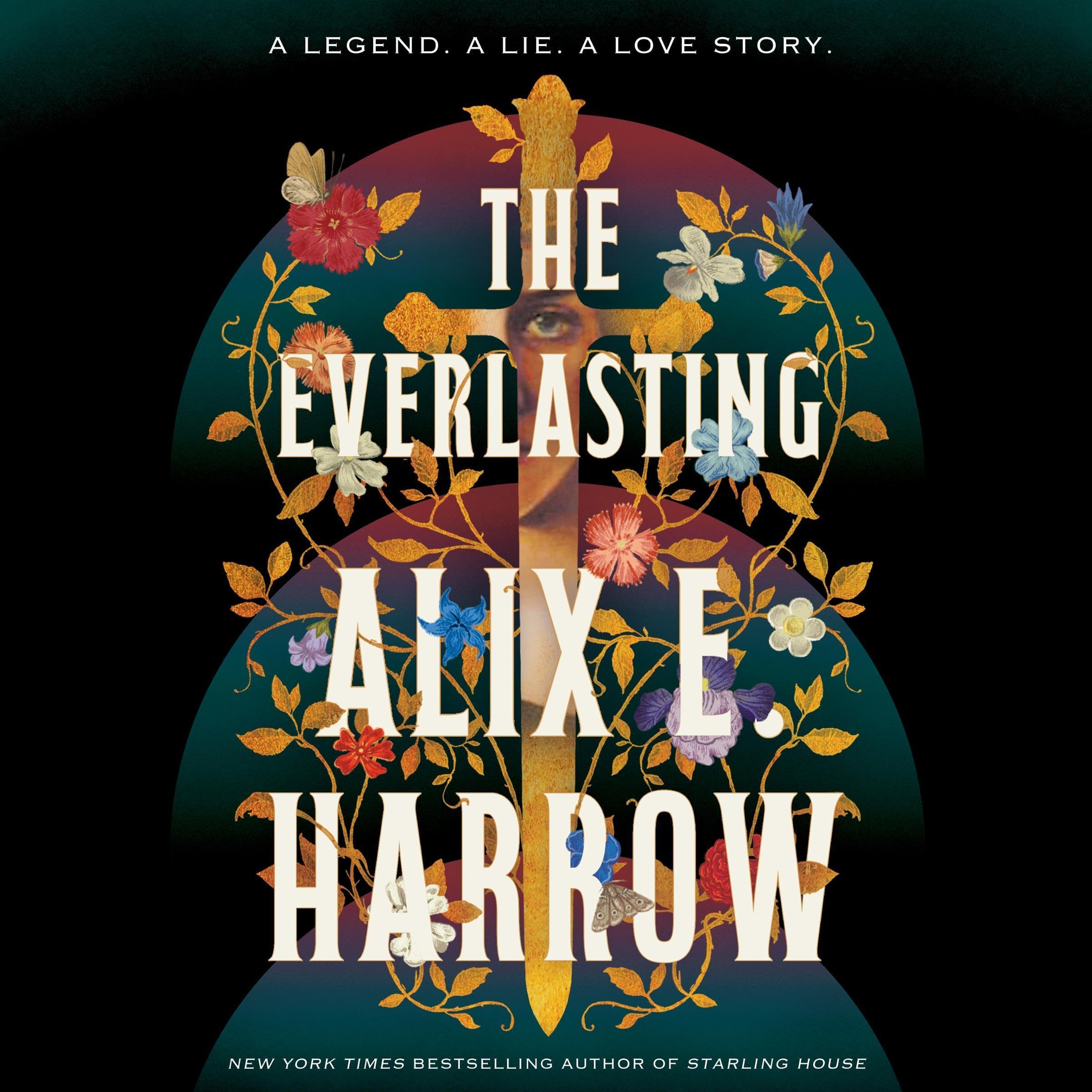
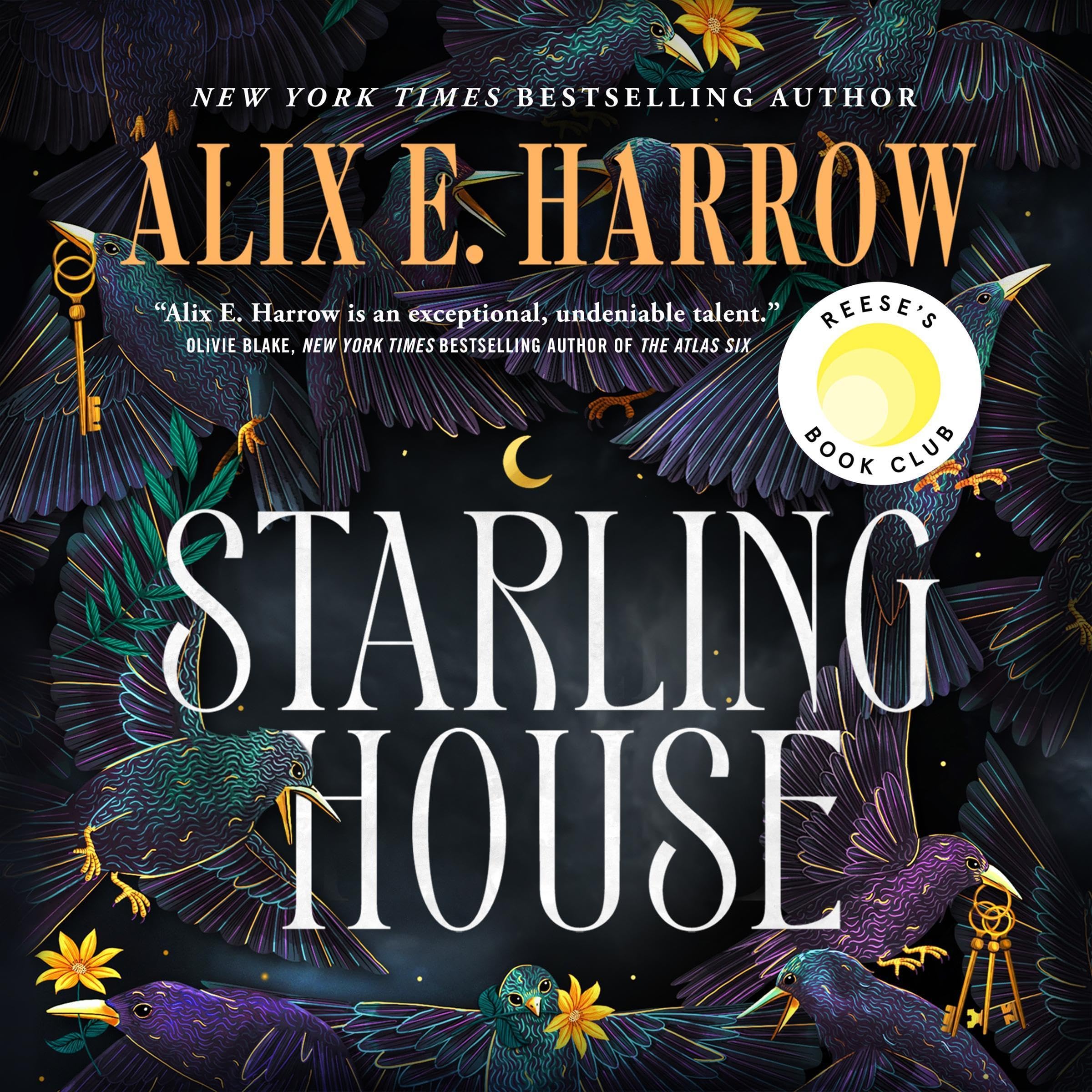
by Alix E. Harrow
In the early 1900s, January Scaller lives as a gilded curiosity within the sprawling, artifact-filled mansion of her wealthy guardian, Mr. Locke. To him, she is merely another object to be collected and contained, but January feels the constant, aching pull of a world far larger than the confines of her sheltered life.
Her existence shifts irrevocably when she discovers a mysterious, leather-bound book tucked away in the shadows of the estate. The book smells of salt air and distant lands, weaving a narrative of secret doors that lead to worlds hidden in the margins of reality. As January devours the text, she realizes the story is not a work of fiction, but a map—and a mirror.
Her journey transcends the page as she begins to uncover the truth about her own origins and the dangerous, magical forces that have sought to keep her quiet. Caught between the stifling expectations of her past and the infinite possibilities of the doors she discovers, January must find the courage to claim her own narrative. This is a lyrical exploration of identity, the subversive power of language, and the courage required to step through the thresholds that define our lives.
Jennifer C.Will you go though the Door?
"In a mansion in Vermont lives a young girl; she is being cared for by the wealthy Mr. Locke, who has employed her father, while her father travels around the research doing some sort of research. Unfortunately for the young girl, January, she feels forgotten and abandoned by her father, who rarely visits her, and when he does visit, they are short and unfulfilling. When January is 7, she discovers a door. No. Wait. She discovers a Door. It deserves to be capitalized because it is not just an ordinary door; it doesn't lead to another room. It does lead to another place; another world. When she tries to tell Mr. Locke about her discovery, he thinks she is overstimulated and has her bedroom stripped of everything stimulating, then locks her inside. Ten years later, she discovers a book that changes her life, having just learned that her father is missing and presumed dead. Unfortunately, there are those who don't want her to learn the information held in the book. To learn that the Door she discovered so many years before was not only real, it was just one of thousands. And through one of those doors is her mother. Her mother, who has been missing for years. The mother her father has been searching for, instead of raising January. But as January begins her own search, there are those who want to keep her from learning anything about the Doors. The prose of this novel was beautiful. It was flowery and poetic and wonderful for this story. Unfortunately, it wasn't wonderful for me. I don't know why it didn't seem to work for me, as I have read other books written in a similar style that I loved, but it didn't Instead of helping the story along, it seemed to slow it down, to weigh it down so that it dragged in places. I felt like the story needed a really good pruning. This is not to say that I didn't enjoy the book, because I did. It was an intriguing story and even when the pacing slowed, it kept my interest. It just felt like the prose was trying a little too hard and didn't quite live up to its promise. While the characters were well-described, they were still not easy to connect with. That, I have noticed, is something that I tend to experience with many historical novels, though I do not know why. It took a while, but by about halfway through the novel, I began to connect somewhat with January. The other characters, though, seemed a bit too one-dimensional for me, though I can't really explain why without giving away spoilers. I will say that of all the characters, my favorite was Bad, who was a very good dog. Though I felt like the characters fell a little short, the world-building was wonderful. The story takes place in the early 1900s in America, and the concept of the Doors and the other worlds to which they connect was interesting and well-developed. I also liked the way in which January's parents' story was revealed, piecemeal, as January reads the strange book she was given upon the news of her father's disappearance/death. For this novel, I listened to the audiobook, which was narrated by January LaVoy. I do admit that I chuckled a bit at the fact that the narrator shared her name with the main character, especially when the name is so unique. LaVoy did a great job with the narration, and her performance really helped hold my attention in the places where the prose was starting to lose me. Her performance is the reason that I gave a rating of 4 stars instead of 3 stars. Though it is unlikely that I will listen to this book again, I would definitely listen to another book narrated by LaVoy. I want to finish by saying that while I didn't enjoy this book as much as other books by this author, it's still a good book. If you are looking for a novel with very descriptive language, then give this one a shot. Though it didn't hit the right spot for me, that doesn't mean it won't hit the right spot for someone else. You take it on the good authority of all the 5-star reviews that it has received that it does hit the right spot for many readers. ["
September 28, 2022 Verified Purchase
Glenn AnaiscourtDoors of Change: A Journey to Freedom
"The aesthetic of this novel evokes the charm and intrigue of a Victorian curiosity cabinet, brimming with eclectic displays of oddities, scientific specimens, artifacts, and natural wonders, reminiscent of the Museum of Jurassic Technology in Culver City. This setting serves as a metaphor for the labyrinthine world into which the protagonist, January Scaller, is born—a world she must navigate and ultimately escape. Unbeknownst to January at first, she exists within the figurative glass case of her guardian, Cornelius Locke. To Locke, January is merely a curiosity to be contained, a pawn in his overarching plan to minimize threats and exert control over the world. As an ex-historian, the author, Alix E. Harrow, resists the tendency in fiction to treat history as mere backdrop, instead embracing its complexity, realism, and often painful truths. The experiences of Harrow’s characters are thus both enlightening and harrowing. January confronts forces determined to close doors to her discovery and exploration, while these same forces impose doubt and demand subservience from her and those around her. Subservience and Control At the top of Locke's pyramid of subservience lie gilded cages, reserved for the privileged few who comply with his rules. For January, this existence feels like "borrowed privilege," wrapped in a veneer of wealth that separates her from the rest of the world. She compares her life to "Cinderella at the ball," aware that her finery is conditional, dependent on her adherence to unwritten rules. Under Locke's system, January faces relentless pressure to trade her autonomy for proximity to power—a bargain that grates against her nature. This defiance exacts a steep social price. Positions at the pyramid's base are vulnerable, and January is warned of the "different standard of living" awaiting her if she resists. Yet, the cost of submission is even higher, for it would mean placing herself back under Locke’s oppressive glass. As she reflects, “If you are too good and too quiet for too long, it will...always cost you in the end.” Despite having "everything any girl could want," January lacks the most essential freedoms: family and autonomy. Truth-Telling in a Twisted World January’s world is one where right and wrong are inverted, and truth comes at a heavy price. Her refusal to conform to Locke's narrative marks her as both a threat and an outsider. Speaking the truth challenges the illusions Locke cultivates, but in his system, truth-telling is easily dismissed as madness. "Most people can't tell the difference between truth-telling and madness," January observes. This societal gaslighting is reinforced by Locke’s persistent, insidious pressure to conform. "The will to be polite," January notes, "is fearfully strong. I wonder sometimes how much evil is permitted to run unchecked simply because it would be rude to interrupt it." Locke’s system distorts reality so thoroughly that people accept demonstrable falsehoods as truths. This collective complacency facilitates Locke’s mission to close doors—both literal and figurative—to broader perspectives and potential freedoms. January feels the weight of this suppression acutely, lamenting how easily a rich man can strip away one's voice, as casually as signing a bank loan. Thematic Exploration: Travel and Transformation A central theme of the novel is travel—not merely physical movement, but the transformative journey of crossing boundaries into other worlds and perspectives. January’s family discovers hope through doors that connect them to other people and places, where "things commonplace in one world may be perceived as miraculous in another." For January, true travel means breaking away from Locke’s oppressive guidance and plunging into the unknown. It’s an act of courage, requiring her to embrace exposure, change, and the risk of loss. Crossing thresholds often demands solitude. As January observes, some boundaries must be crossed alone, "like an explorer at the precipice of some new, wild world...entirely [oneself]...and entirely alone." Yet, once one has glimpsed another world, its existence can never be denied—a reality Locke and his agents strive to suppress. Challenging Power Structures The novel critiques systems that classify and control people, supporting power structures that deny individuals their realities. It doesn’t limit this critique to dominant power structures but extends it to any that perpetuate oppression and conformity. Locke's obsession with sealing doors to "magic, secrets, or forgotten spaces" reflects his fear of change and the unknown. His paranoia drives him to create a system that mirrors the very chaos he seeks to prevent, imposing subsistence, submission, and violence on others. January, however, embodies the potential of transformation. Her in-between social status, while isolating, grants her the resilience and adaptability to navigate doors to other worlds. She recognizes that "things can't just keep on forever the way they are" and urges others to embrace change, despite its dangers. “We should find our own power and write it on the world,” she declares, challenging readers to open their own doors to possibility. Application to Life and Legacy This novel ultimately celebrates the courage to dream, the curiosity to explore, and the strength to challenge oppressive systems. January’s journey invites readers to confront the limits of their own worlds and embrace the transformative power of change. As she boldly proclaims, “Be strong and shine powerfully, beautifully strange, raised in the light of ten thousand suns.” ["
January 2, 2025 Verified Purchase
Kindle CustomerNot what I expected, but lovely nontheless
"This book was not what I expected, but I still loved it. To be clear, this is not a whirling trip through ten thousand fantastic and alien worlds. You will visit perhaps three or four, and hear of a few more, but the book is more concerned with it's characters and theming. To be clear, it works. The themes are strong and wonderfully sweet, and the characters are the same. The book shares a strength with the best Disney films - it makes you want desperately for our main characters to be happy, and cheer for them to reach their far-off goal. Watching January grow into a force to be reckoned with is a true pleasure, and both the supporting cast and villains are excellent. The writing style is, to my mind, perhaps the best part of the book. First person and self-aware, mixing elegantly between different viewpoints through the two in-universe texts that the final novel is composed of. Unraveling the narrators, and their intended audience, is a delight (if not terribly difficult). Anyway, this book is charming and clever and well worth your time. ["
September 24, 2024 Verified Purchase
Angela DeyA beautiful story about the love of stories
"If I've learned anything from Reading Rainbow, it's that a book can take you on an adventure to an impossible world and give you an escape. Alix E. Harrow took that idea as a challenge and takes you on many adventures to many wondrous worlds in The Ten Thousand Doors of January. It is a story within a story within a story, so carefully woven together you float between them with ease. January feels like an in-between girl, locked away like one of the many "treasures" her caretaker, Mr. Locke, collects and keeps in Locke House. She loves the beauty of words and cherishes their magic as she gets swept away in stories snuck to her by her only friend, Samuel the grocer's boy. She revels in the adventures of these stories and hopes to some day go on adventures of her own. Mr. Locke employs January's father to travel the world gathering more treasures, so January rarely sees him. She's a feral child by all accounts, though Mr. Locke tries his best to tame her. As with all good stories, there's a darkness lurking ready to devour January. She spends most of her life caged inside the house of treasures, but the disappearance of her father sets into motion an adventure she might not be ready for. She has to break free and learn to be brave and strong to discover who she really is and what she's really capable of. Like January, I am also passionate about words. I love how they can activate the imagination, bringing not just visions to your head but wild and passionate emotions. They are sensory and sensual. I absolutely love how Harrow makes this passion for words so central to the story. At its core, The Ten Thousand Doors of January is a book of love of stories, and it's beautiful. Harrow uses her words meticulously, letting you wonder in awe at times, making you uneasy though you don't quite know why, wrapping you up in adventures that make your heart race and slamming you in the chest when worlds come crashing down. If you are looking for a great escape, The Ten Thousand Doors of January has 10,000 of them. ["
November 12, 2020 Verified Purchase
Haruki Murakami
LeAnna Ehrsam

Ruth Hogan

Gareth Brown

LeAnna Ehrsam
LeAnna Ehrsam