 Find Romantasy Books

Outlander 4-Copy Boxed Set: Outlander, Dragonfly in Amber, Voyager, Drums of Autumn
Diana Gabaldon
4.8
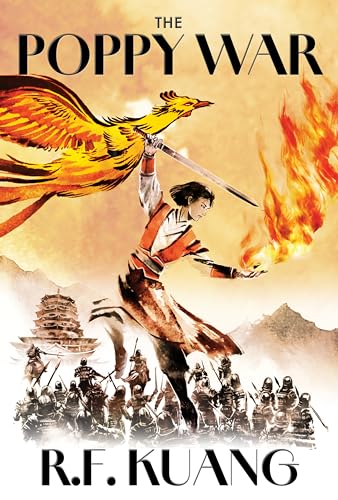
by R. F. Kuang
Fang Runin, a war orphan from the impoverished Rooster Province, defies all expectations when she aces the Keju, the grueling Empire-wide examination. Her acceptance into Sinegard, the elite military academy of the Nikara Empire, offers her a rare escape from a life of servitude. However, the halls of Sinegard prove as treacherous as the battlefield; as a dark-skinned peasant girl, Rin faces relentless prejudice and bullying from her wealthy, privileged peers.
Amidst this isolation, Rin discovers she possesses a lethal, forbidden aptitude for shamanism. Under the guidance of a volatile, eccentric master, she learns to commune with the vengeful Phoenix, a god of fire and destruction. As she taps into this terrifying, unearthly power, the fragile peace of the Empire begins to crumble.
The militant Federation of Mugen looms across the sea, threatening a Third Poppy War that could annihilate everything Rin has fought to survive. Rin soon faces an impossible choice: she must decide if she is willing to sacrifice her humanity to wield the god-like power necessary to save her people. In this brutal world of military strategy and ancient mythology, the line between hero and monster blurs, revealing that the cost of victory may be far steeper than she ever imagined.
EarikInteresting beginning and ending, with some seriously brutal moments
"Overall, I liked this book. I struggled trying to figure out a star rating for it though. It was definitely "good", but I'm not sure if it quite got to "great" for me. I loved how the author drew from actual mystical/martial traditions as her backdrop. Bodhidharma, ki/chi/prana, shamanism, etc, all made for a really exciting environment. It wasn't totally accurate, but I don't expect it to be either. When you're into all that stuff, it's cool to be reading about a version of it. So that part was great. There are two issues with this book. I'm not going to deduct any stars for this first one, but I think any review that doesn't mention it isn't accurate. There are some crazy war atrocities committed in this book. It's heavy stuff, and it goes on for *pages*. I steer clear of horror, but don't have a problem with violence and killing in regular measure, but I think this book takes the prize as far as the pile of gore that you get exposed to in that section. I get why the author put this in there. It fits with how bad the Federation army is, and as a reader you really need to understand that in order for what the heroes decide to do next to make proper sense. But still. Holy crap! Although I haven't read them, I strongly suspect that most of the bad reviews of this book are on behalf of YA readers who unexpectedly found themselves in the middle of all that gore without any warning. Whoops! Fake out! This is not high school crushes and friendly vampires. This is war. :-) Again, I didn't deduct any stars for that, because it's part of the story and I see why it's in there. But still. Expect a hard slap in the face if you're a squeamish reader. The second issue with the book is the one that actually did bother me. The book is broken into three parts. The first and third parts are great, and carry the story. The second feels like filler. Nothing really happens there. The character is stuck, the story is stuck, and reading through that made me feel stuck too. I think that whole second part should just be cut. Unfortunately, everyone wants to write triologies, and trilogies have to be long enough to fill three books. So almost without exception, every time I read a trilogy, I find myself with a couple hundred pages of wasted space. I read the ebook version of this, so am not sure of the final page count, but it feels like about 500 pages. It should be 300. That would have been the perfect length, and everything would have moved a lot more crisply. The second book isn't going to come out for another six months. I'm not sure if I'll read it or not. If it were available now, I'd probably buy it. But in six months, I'm not sure if I'll be into it or not. I think it could be a great series if the author is careful, but I can also see how it could fall on its face if she's not. In my opinion, if she focuses on the main character as she comes to grips with her powers and learns to tame them, it will be good. But, if she just focuses on war and brutality, then it's going to be a let down, because in that case the main character is going to be transformed from someone you care about to someone you don't, and doing that will break the whole story. ["
November 20, 2018 Verified Purchase
JordanA stunning beginning to a new fantasy trilogy
"This was absolutely insane and incredible and I can't stop thinking about it. Basically, I've been looking forward to this book for quite a while, and then when it finally came out I started seeing rave reviews for it everywhere about how wonderful and brutal this book was, so my excitement skyrocketed up and I ended up picking it up way sooner than I expected to. If you've seen anything about this book, then you have probably already seen people calling it extremely dark and intense, and well, they're not wrong. It's also incredibly riveting and an exceptionally exhilarating experience. The Poppy War spends the first portion of the book in the sort of school setting that we all tend to love in fantasy books. There are, of course, rivalries among other students and the protagonist, Rin, since she isn't overly welcome and doesn't fit in, which leads to very few real friends. However, this school setting is still very fresh and exciting and it works really well with the atmosphere of the book. There's a lot of variety within the school itself and what is taught and it's not your average 'fun school setting,' but rather is a harsh environment where you're sort of left to fend for yourself for the most part. I really liked that the rivalries among the students didn't take up too much time and energy and that the school period wasn't just filled with savagery and revenge like in a lot of books. Instead of focusing on this, everyone was too busy actually studying and trying to focus on their own work and grades, which was oddly nice to see As mentioned, this school setting only lasts for the first half or so of the book, so if you don't like school settings then don't worry because it's not the whole thing, but if you do like school settings then I promise you'll enjoy it. The Poppy War takes inspiration from China's brutal 20th century history and draws many similarities between various events and themes/ideas between the two. I liked knowing about this inspiration before reading the book because it added some extra curiosity to my reading and actually inspired me to get back into learning more about China's history. The world itself that Kuang crafted in The Poppy War is incredibly realistic and it truly felt like it was a place that actually existed. There were strong mythical and cultural elements that built up this world extremely well and added so much to it. I love when there are such strong elements like these in books that allow the culture to bleed into the story through a variety of ways that, again, make this world feel so real and interesting. As with many fantasy books, there is a pretty decent sized cast of characters. Every character had really strong characterization and development overall and I really didn't think that there were any characters that were purely one-note; each one had many different sides that were interesting to explore. Rin, our protagonist, is truly an interesting person that constantly had me wondering what she was going to do next. She's a bit reckless, but this didn't annoy me as much as in other books because I sort of understood where her recklessness came from based upon where she grew up and what the current stakes in her life were. I loved watching her grow throughout this book and I think Kuang did an excellent job at creating such a fascinating character that, although we might not always agree with what she's doing, still has an engrossing journey that I am fully invested in. Among other characters are Altan, a top student at Sinegard and the last known member of the Speerly race still alive; Kitay, one of Rin's only friends; Jiang, a professor at Sinegard who is not widely respected and is a bit of a wild card, and Nezha, Rin's immediate enemy. Kitay and Jiang were easily some of my favorite characters. I felt that they both had such interesting personalities that were explored in very different ways. Kitay comes across as a rather normal type of student, but there's much more to him than expected. Jiang is a very complicated person, but he's also an especially intriguing person and is one of those that you can't help but be drawn to due to his great mystique and many unpredictable and strange actions. There are honestly a lot more characters that I could touch on, but I fear discussing them could give away minor spoilers about future plot points in this book, so I am going to refrain from doing so in this review. Although there are some dark elements in the beginning of the book, it isn't until the second half of the book that things really take a turn for the truly dark and difficult. There are some images described that are so hard to imagine--and honestly, I didn't want to imagine them most of the time-- and really make you wonder at the depravity of humans and how low they can get. At times, the last part of the book actually felt like a completely different story from the first half, almost as if I was reading multiple books in a series instead of just one, and I actually loved that. There is so much going on that you hardly ever even have a chance to feel bored or think that the book is dragging; something new or intriguing was almost always going on. Overall, I loved The Poppy War. This book is beyond thrilling, fully compelling, and one that I once again cannot recommend enough. I've given The Poppy War five stars. ["
August 3, 2018 Verified Purchase
Amazon CustomerInteresting and fun, but a bit uneven
"First the good parts: - Solid, enjoyable world-building, with the competing philosophies of shamanism, the push towards modernization and conformity, and the historical ebb and flow of power and subjugation being the standouts. I found myself oddly intrigued by the history of martial arts. - The military portions, while exceedingly brutal (do NOT mistake this for YA and give it to your child -- hell, even if you're an adult be prepared for graphic violence, including sexual), were a lot of fun. There's a mix of practical warfare, including chemical weapons and incendiary devices, with magical stuff that was honestly pretty engaging. - A common problem when you bring gods and magic into fantasy is "Why is there any conflict if the characters are this powerful?". That is not present here. The consequences of trying this are shown, and they are BANANAS. It's great. - If you like characters who are allowed to be horrible people, then you will not be disappointed here. I saw another review that said the heroine seemed insane by the end. This is a feature, not a bug. Between the very graphic war crimes and what we learn of the human relationship to the gods it's amazing anyone is still remotely functional by the end. - You get to the end and it's like...wow. This can't end well. I consider this a plus. Weak points: - Did feel like the first book could have been condensed. The primary conflict didn't come into play until 40% of the way through, after which the military portion kicked in and carried it through to the end. (Oddly you could conceivably start with Book 2, since it even included its own prologue.) - The style may be hit-or-miss for some. It lacks the stuffy tone of Tolkien-esque Epic Fantasy, which I appreciate, but occasionally veers into Quippy Territory. Depending on your preference this may be a pro or a con. - Very particular point: May read a little weird if you're a Japanese-American. This is influenced by real atrocities committed during the Sino-Japanese War, so if you're not willing to think about that ugly bit of history just skip it entirely, but oddly what bothered me more was that the Japanese proxy race were described in the same generalized terms of hive-minded fanatical hordes that were used to describe Japanese-Americans during World War II. There's a touch at the very end that indicates the culture isn't uniform evil, but we never seen anything to challenge their depiction as anything but sadistic monsters. There are also some textual reasons to present them as one-dimensional, and it may be challenged in the second book. Obviously this didn't keep me from enjoying the book, and it may not bother others at all, but if you do happen to have this background and just wanted to settle down and enjoy some Asian-inspired SFF do not be thrown. All in all, a little bumpy but intriguing enough that I'll be checking out the sequel. ["
May 20, 2018 Verified Purchase
John KangGood, But Didn't Live Up To My Expectations
"In my review of Naomi Novik’s His Majesty’s Dragon, I proclaimed to be an avid student of Napoleonic History. If there’s one era that fascinates me even more, it is China’s transition from imperial rule, through the Republican Era, and the establishment of the People’s Republic. When I heard R. F. Kuang’s The Poppy War was an epic military fantasy based on the Second Sino-Japanese War (known by the Chinese as The Oppose Japan War, by Imperial Japan as The China Incident, and the ignored by the rest of the world as a prelude to World War II), and it was receiving rave reviews, I knew I had to get my hands on it. The Poppy War gives us a lot to love: The main character, Rin, is an orphan you cannot help but to root for. Raised by opium dealers in the southern countryside, her lot in life is marriage to an old but influential merchant. However, she has not only been secretly learning to read and write, but also studying for the prestigious civil service exams. It lands her into a top military academy, where she faces a brand new set of challenges when pitted against classmates who’ve grown up training in martial arts and studying classical literature. Her failures and growth as a shaman and as a character, as she learns her true identity, make for a compelling story. Her personal and professional connections feel textured and complex. Among my favorites included her rivalry with a snobby, martially talented classmate, Nezha; her friendship with a brilliant classmate Kitay; her combative student-mentor bond with the perpetually high Master Jiang; and idolization of senior and later commander Altan. What I found beautiful about these relationships is how they evolve as circumstances change and Rin grows both as a person and in power. Inasmuch as James Maxwell’s Shifting Tides series seems based on a Hellenistic world and the Peloponnesian Wars, The Poppy War is not quite China and Japan; yet has real-life Chinese locations and names such as the Wudang Mountain; philosophers Zhuangzi and Mengzi; and famed tactician, Sunzi (the modern Romanization of Sun Tzu). The author has clearly researched the Gua (Trigrams) of the Book of Changes (I Ching/Yijing) as she infuses the story with lore and a rich history. The illicit drug-related magic system harkens back to real life shamanic traditions, and the infighting among warlords mirrors late Imperial and Republican China’s historic weaknesses. As such, the setting feels real and lived in. Solid and engaging, the plot moves along at a decent pace. It includes elements immediately recognizable as Japan’s “comfort women” system and ruthless research Unit 731. The story is not for the weak-stomached, due to brutal depictions of torture and murder, and recounting of systemic rape. Yet, the graphic violence doesn’t feel gratuitous. Not only does it move the story forward and contributes to Rin’s character development, but also paints a picture of real war, unsanitized or ignored by basic history books. These scenes might be the closest thing to a visit to the Rape of Nanjing Memorial in China many readers will ever get. (On a side note, the author listed the late Iris Chang as one of her literary inspirations. Ms. Chang wrote the highly acclaimed book, The Rape of Nanking. It is well worth the read.) All that said, I really really wanted to love The Poppy War; and I think had I approached it with zero expectations, I would have. My major complaint with the book is the military setting. I had seen references to the Second Sino-Japanese War, which to me implied tanks, steel warships, fighters, and bombers; the title The Poppy War reminded me of the mid-19th Century Opium Wars, where Britain’s steam-powered gunboats demolished Imperial China’s wooden junks and proceeded to bombard coastal defenses with cannons that China’s primitive artillery could not match. As such, I was looking for cues as to the technological level. Although Rin trains in martial arts at the military academy, it did not immediately imply a technological level for me (after all, even modern armies practice unarmed combat; and even though she is depicted with a bow on the cover, even Rambo used one in First Blood). Forty-percent of the way through the book, when hostilities between Rin’s homeland of Nikara break out with the island nation of Mugen, I was frustrated at still not knowing. Was the “lightly built,” “elegant” ship an Age of Sail ship of the line, or a steam-powered gunboat? Was the “armored column” a line of panzers, or men in mail? Are the soldiers’ “armor” Chinese fish scale lamellar, Japanese yoroi, steel cuirasses, or flak jackets? When all males were rounded up and “shot,” was it with pistols, or crossbows? Were “munitions” musket balls, jacketed bullets, grenades, or mortar rounds? Though Nikara’s soldiers shoot volleys of arrows at Mugen’s troops, is this because they are technologically inferior, or because that’s what both sides use? I felt much of this could have been conveyed more explicitly if not earlier, during Rin’s tenure at the military academy, then as she hears reports about the progress of the war—as is, we know Nikara is losing, but not whether it is due to just organizational inferiority, or also a wide technological gap. It isn’t until Rin faces several warriors hand-to-hand, and then a mounted Mugen general wielding a halberd, that I felt certain that both sides fought at the pre-firearm level. Despite these complaints, the rest of the story shines. Kuang’s writing style is unembellished, unpretentious, and easy to follow. At times, the dialog feels modern-colloquial, which gives it a young adult feel. With all these factors considered, I rate The Poppy War 8 stars out of 10. ["
December 16, 2018 Verified Purchase
Diana Gabaldon
V. E. Schwab
Diana Gabaldon
Natsu Hyuuga

Natsu Hyuuga
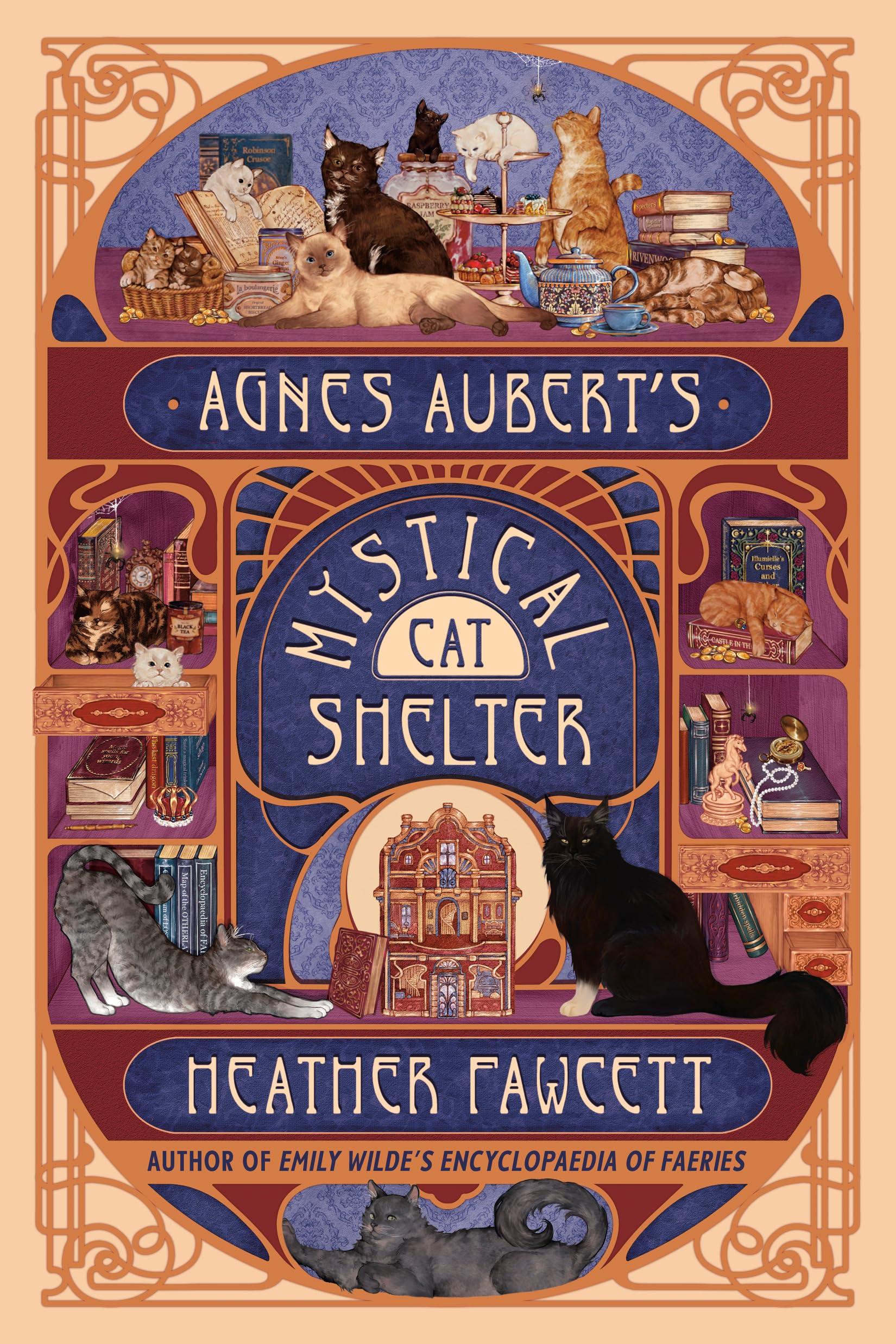
Heather Fawcett

