 Find Romantasy Books

A Court of Thorns and Roses
Sarah J. Maas
4.6
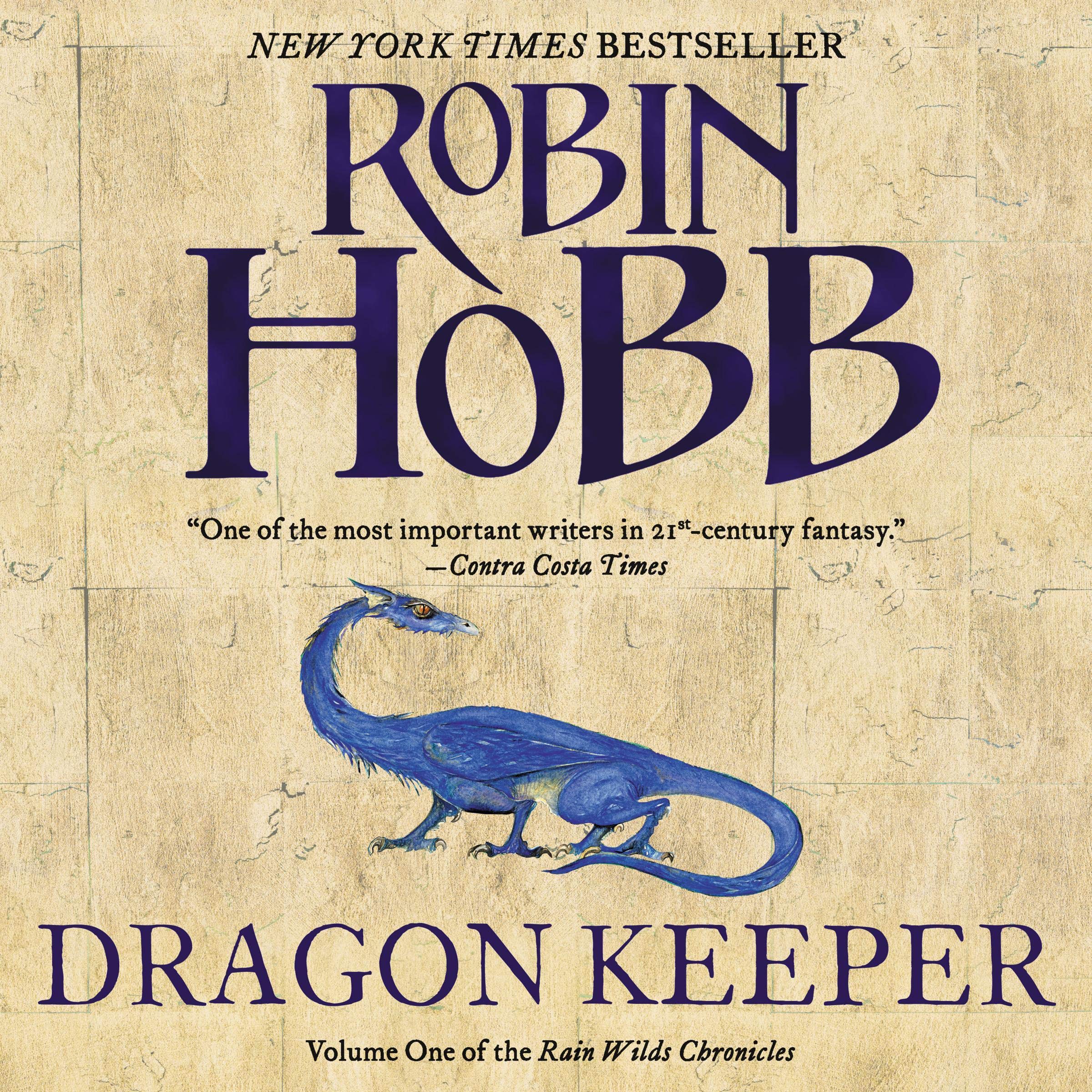
by Robin Hobb
In the aftermath of a war-torn peace, the once-revered dragons of the Rain Wilds have hatched into stunted, deformed creatures that the wealthy Traders view as a burdensome liability. Abandoned by their protectors, these dragons face a grim fate unless they can reach Kelsingra, a mythical city lost to time and memory. A desperate expedition is formed to escort the dragons up the treacherous, toxic river toward their ancestral home.
The journey forces together two women from vastly different worlds: Thymara, a resourceful girl raised in the harsh wilderness, and Alise, a neglected wife seeking purpose beyond her stifling marriage. As the expedition navigates the lethal landscape, the bond between the dragons and their human tenders deepens into a complex, symbiotic connection that challenges their perceptions of survival and identity. Against a backdrop of political betrayal and environmental peril, the group must grapple with the dragons' erratic, predatory natures and their own evolving desires.
With no guarantee of reaching their destination, the travelers embark on an odyssey that tests the limits of their loyalty, courage, and capacity for love, forever altering the future of their civilization and the survival of a dying species.
Esther SchindlerOh my, oh my. Another winner from a reliable author.
"There are a few fiction authors whose writing is so unrelentingly wonderful that all I have to see is his or her name on a book I don't own... and I walk it right to the checkout counter, without even looking at the description. Robin Hobb long ago earned a place on that list, for me (along with Lois McMaster Bujold, Elizabeth Peters, Barbara Hambly, Laurie R. King, and Steven Brust -- in case your tastes jibes with mine and you want to expand your reading list). If you want to know just how excited I was to see a new Hobb novel... I was offered a free copy through Amazon Vine and decided instead to pay for the hardback with my own money because I wanted "the real thing." Yeah. She's that good. This new series is set in the same world as Hobb's Assassin series and in the same part of the world as her Rainwild Chronicles/Liveship Traders. If you haven't read either of those, please don't start with this book. There's way too much "what has gone before" for you to figure things out. Instead, start with Ship of Magic (which won't be any hardship, I assure you). Dragon Keeper starts a few years after we last saw the characters from the Rain Wilds Chronicles, and some of them have bit parts. The central part of the action in this first volume is the dragons who Tintaglia so earnestly insisted that Our Previous Heros had to protect and nurture... except that, unlike the dragons you might envision from Pern, these don't all emerge as perfect specimens. In fact, *none* of the new batch of dragons are quite-right, and all are incapable of flight. As a result, they need humans to take care of them... until the dragons decide to take fate into their own hands. Sort of. The book starts out in a herky-jerky manner because Hobb has so many characters to introduce. It's as though she has to set up the chessboard with all the pieces before she can get the tale truly underway. But I don't mind, really, because -- as usual -- she creates characters whom I care about, even when they may be at odds to one another. She has invented a world that is consistent within its own physics and is, I suspect, infinitely discoverable. I also really enjoyed Hobb's underlying premise, that things don't always work out quite right, such as dragons who can't fly but have all the arrogance of those who do. And I was charmed by the conversation between the people who send messenger-birds back-and-forth; there's quite a bit of humor here, as well. The book ends without any major resolution; you will want the next book in the series in your hands NOW (at least I did) and it won't be out for a few more months. But oh! This is the sort of Fantasy novel I love. If you like either of the earlier series, I think you'll devour this book with the same enthusiasm I did. ["
February 17, 2010 Verified Purchase
The Happy ReaderA surprising new take on dragons
"Love the adventure and the different characters, each with deep and developed backstories. I especially love the lore surrounding the dragons, dragon spawning, and how it all felt very real. Almost as though I might run into a worm cocoon on the beach somewhere! I felt the female character's storyline was a bit dated, but that's more a sign of the times than anything. Parts of the book were slower than others and I really had to force myself to get through a couple sections. 4 out of five stars for pacing. ["
May 11, 2026 Verified Purchase
Ardella CrawfordWait until the next volume comes out....
"I am a huge fan of Robin Hobb's books, and I think this is a worthy sequel to the first nine books (starting w/ the Farseer trilogy and ending with the Tawny Man trilogy). I have rarely felt so frustrated, though, at the end of a book. It just stops--and leaves the reader in an agony of suspense on several fronts. Hence the title of my review: wait until the next volume comes out in May to read it. I disagree with a lot of the comments in reviews already posted here. This book has many themes, and Robin Hobb is taking her time to develop them. I suppose that is what occasioned the complaints about the "slow pace." It certainly didn't strike me that way--I galloped through it way too fast and could hardly put it down. I thought Hobb's first trilogy (Farseer) was an exploration of what it means to be a man, and I thought the Liveship trilogy similarly explored what it means to be a woman. This book seems to me to be about relationships between men and women and how sexuality is dangerous and complicated. It's a story first, of course, but I think Hobbs's books are profound, with many levels of meaning. If you really get what she's writing about here, I don't see how you could find any of the scenes cliched or meaningless. She's up to her usual method: dumping a collection of characters into certain circumstances in life and then seeing how they cope with reality. I have never seen an author so obsessed with reality. And yes, it's bleak sometimes. A lot of the time, just like real life. Her characters find out whether they're man enough or woman enough to get through it and become what they were meant to be--just like real life. And I could NEVER be "on the fence" about whether I will read the next book or not. Clearly the book was cut in half, and to confirm it, go to [...] and read the interview there with Robin Hobb. The second volume apparently completes the story (see Robin Hobb's blog at [...]), so at least that's a relief--we won't have to go through this again! At least not with this book. Finally, I don't find the various love interests in the book to be unrealistic. Someone complained about Captain Leftrin's falling in love like a boy. Late love is like measles--older people get it worse--and sometimes aren't as level-headed as they would be if they were 20 years younger. Hobb portrays an attitude toward love and sex that is, in some ways, more 19th century than it is 20th or 21st, and it's realistic enough for certain times in history, even if not for today. ["
February 12, 2010 Verified Purchase
Andrea LuhmanI would like to have given this book four stars
"A vividly real read from start to finish. I adore the authors endearing and flawed characters. I would like to have given this book four stars, but the ending or lack of one killed my affection for all of the other very good things found in this book. What I liked: 1) How real the characters are. They are presented with flaws, or make mistakes, and have quirks. The characters are varied, Hobb introduces you to a fairly large cast, but she has made it easy to like and get to know each one. 2) Hobb has a gift for creating a new and vividly real world. You get to see life in a city nestled high in the canopy of the rain forest. The life of another city nestled on dry land, and then the life in cities excavating ancient cities below them. We see the brilliant idea of a “living ship” and witness life aboard a river barge. She takes you into a dragon’s point of view. You feel the exhaustion from a serpent migration, the taste of mud as she built an encasement, and then the exhausting hunger as she emerged to a new life as a dragon. There are social rules, history, and culture that effect and add contrast to this story. 3) I like how the author kept me guessing about which of the keepers Thymara might eventually have a romantic connection to. How she see’s each of her three prospects differently. Feeling jealousy over one, comfort from another, and strange desire from one she doesn’t really like. It was a wonderful way to mix both plot and characterization into the unfolding action of the book. What I did not like: 1) No more back-stories Ms. Hobb. Cease and desist from writing anymore sad childhood memories, and recollections from the past. These would have had more impact if used sparingly. The dragons memories were needed to provide understanding of this world. Alise’s established her character, and Leftrin’s successfully added drama by way of hidden secrets. However the rest could have been edited out. Sedric’s was especially annoying, where it was placed in the book made the story drag, read as redundant, and provided little to no new information. I just don’t know why the author thought it was needed because I felt she did well establishing Sedric and Hest in a devoted relationship. I was hoping for more drama when their big secret was revealed. While these memories told us for certain our suspicions were correct, they told us nothing more we did not already know. I would rather have the depth of the Hest/Sedric relationship confirmed in a scene between Sedric and Alise. I also think every scene from Hest’s point of view could have been eliminated. He would have been a better bad guy without them, and the drama of Alise’s failed marriage would have increased. 2) Did I mention redundancy? If I didn’t, or if you the reader are not keeping up let me mention it again, there’s redundancy in the book. Yes this is a fantasy fiction book and many authors build redundant descriptions into the narrative to teach the audience about this fictional place. However in this book, some of these character and place establishing lead in’s went from annoying to insulting. I wondered about it after awhile. Were these remnants of an old outline that never got cleaned up in the editing process? Did some suggest Hobb restate these basic facts over and over again? Does she really think her target market has this low of an IQ? I would read these and hear myself grumbling, “No kidding, we’re 300 pages in.” 3) The ending was a disappointment. Not only was the main plot not resolved, but none of sub plots were either. The ending of this book is not an ending. This ending was not even something I would classify as a cliffhanger. To me the book just stops mid story, as if the author was only allocated so many words by her publisher, or this was the best place to stop according to her editor. This did not throw me too much. I have the next two books in my pile of “to-read’s” at home. However I caution anyone who needs resolution from their books, to have the next book on hand. ["
June 29, 2014 Verified Purchase
Sarah J. Maas
Alix E. Harrow

Raven Kennedy
Raven Kennedy
Raven Kennedy

Raven Kennedy